

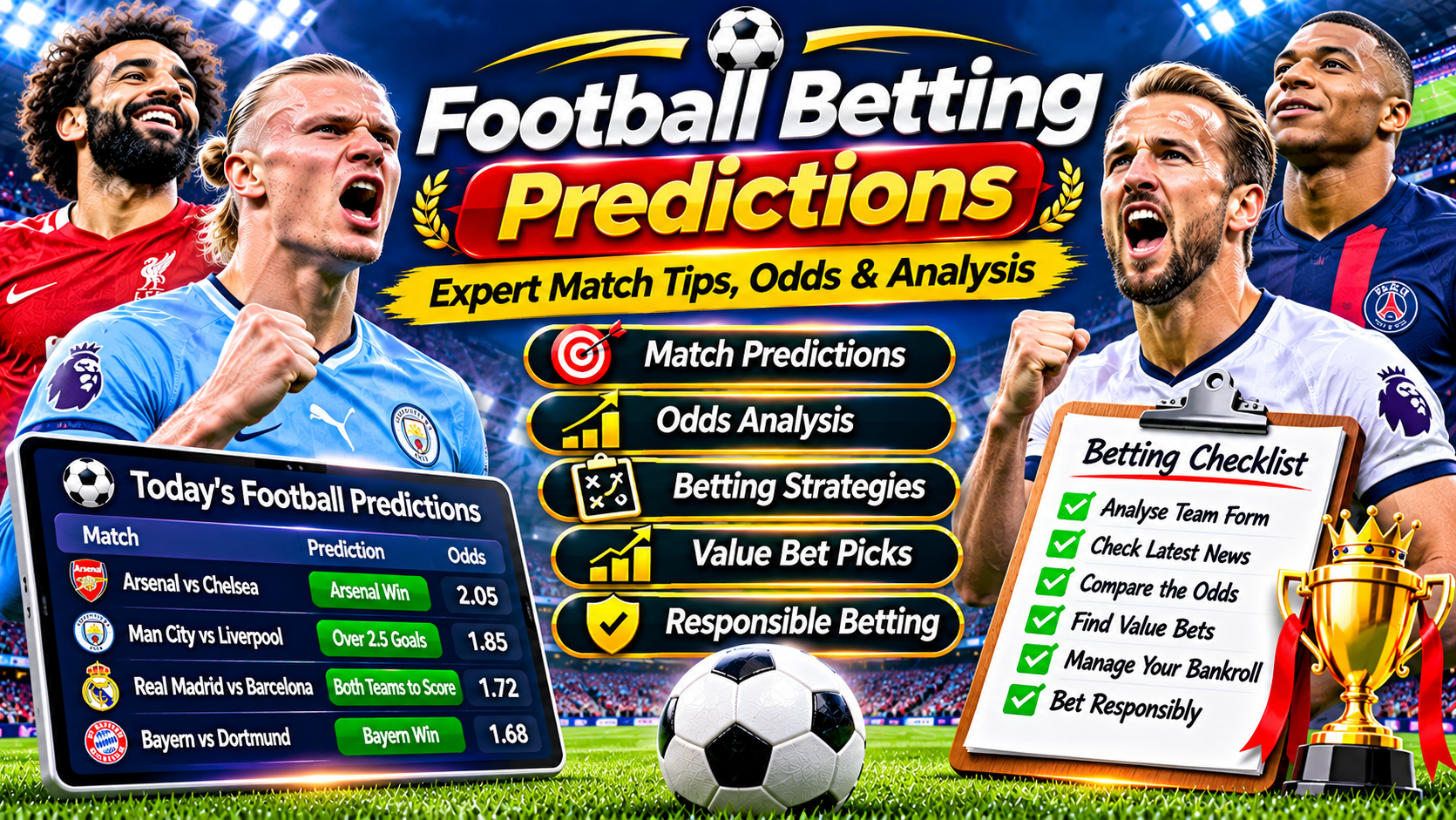
How Experts Build Reliable Match Calls
Strong betting decisions start with a process, not a hunch. The best analysts combine team news, tactical matchup, and market behavior to identify where value may exist. Instead of chasing popular picks, they map how Football Betting Predictions each side is likely to play and then compare that to the odds you can actually get. This is where prediction quality improves: you’re betting on probabilities you can justify.
Begin by checking the most predictive signals, such as lineup stability, defensive organization, and chance-creation patterns. If a team consistently generates shots from dangerous areas, its attacking output tends to be more repeatable than teams that rely on low-percentage long-range efforts. Next, evaluate opponent-specific tendencies, because matchups can amplify or neutralize a team’s strengths. Experts also watch for late odds moves, since market shifts often reflect new information before it becomes widely understood.
Team Form, Tactics, and Matchup Pressure Points
Form should be interpreted through context, not just results. A team that looks “in form” might be benefiting from favorable fixture difficulty, while another may be underperforming despite strong underlying numbers. Look for indicators like expected goals trends, shot volume by zone, and whether the team concedes high-quality chances. When those factors align with recent results, predictions become more grounded.
Tactical matchup is another critical layer for expert recommendations. For example, if one team presses aggressively, the opponent’s ability to play out from the back can decide the game rhythm. If the underdog struggles under pressure, you may see more turnovers in dangerous areas, which changes the best betting angle. Similarly, when a side uses wide overloads, the quality of the fullbacks and center-back communication becomes a key pressure point.
Odds, Goal Markets, and Value-Based Betting
Odds are not random—they encode the market’s consensus view of risk. To find value, compare the implied probability of a bet with your own probability estimate based on the match profile. If your assessment suggests a different outcome likelihood than the price reflects, that gap is where a smart recommendation can appear. This approach helps you avoid “paying retail” for outcomes that the market already fully priced in.
Goal markets often provide clearer ways to align predictions with match flow. Totals can reflect tempo, defensive gaps, and finishing quality, while both-teams-to-score can highlight matchup dynamics in transition. If one side tends to control possession but struggles to break lines, under-focused finishing markets may be more favorable than blanket over bets. Conversely, if both teams create chances through opposite styles—one through possession and the other through counterattacks—goal markets can capture the likelihood of back-and-forth moments.
Expert Recommendations for Common Bet Types
For match results, many experts prefer a disciplined method: confirm whether the favorite’s edge is supported by shot quality, defensive reliability, and game-state control. A favorite might be overpriced if it can’t consistently generate high-quality chances or if its defense becomes vulnerable to direct play. For underdogs, the most profitable angle often comes from predicting how they can keep the match close, such as through structured defending and fast outlets. That’s why “long-shot” recommendations usually depend on tactical fit, not just emotion.
When choosing markets like double chance, draws, or handicap formats, focus on volatility. Teams with stable defensive shapes often reduce the likelihood of a complete collapse, making these bets more consistent than strict win-or-lose wagers. If a match features a clear style clash, you may also look for player-driven contributions, such as set-piece advantages or a striker’s role in pressing triggers. Still, avoid overfitting: keep your logic simple enough that it remains true even if the early goal swings the game.
Conclusion
Use team news and tactical matchup to estimate probabilities, then compare those probabilities to what the market offers. When you find mispricing, you can place bets that reflect value rather than popularity. This is the core difference between casual guessing and expert recommendations. Finally, bet responsibly by sizing stakes to protect your bankroll and avoiding chasing losses. Set limits before you place wagers, and remember that even well-researched bets can lose due to randomness in finishing and refereeing. If you treat predictions as a process and follow disciplined risk management, you’ll improve both decision quality and long-term consistency. Visit reputable betting resources and always follow local regulations while staying in control of your spending.